How Much Does It Cost to Build an E-commerce Website in Egypt in 2026?
How much does it cost to build an e-commerce website in Egypt? Learn about platform, domain, payment, shipping, design, and marketing costs you should consider before starting your online store in 2026.

If you're planning to start selling online, one of the first questions you'll probably ask is: how much does it cost to build an e-commerce website in Egypt?
There isn't one fixed answer. The total cost depends on how you build your store, whether you use an e-commerce platform or develop a custom website, and the additional costs of domains, payments, shipping, marketing, and day-to-day operations.
In this guide, we'll break down the main costs you should consider before launching an online store in Egypt in 2026.
What Determines the Cost of an E-commerce Website?
Building the website itself is only one part of the overall cost.
Your e-commerce budget may include:
• Store setup and operation
• Domain name
• Store design
• Product content and images
• Online payments
• Shipping and delivery
• Marketing
• Maintenance and development
You don't necessarily need to spend money on all of these from day one.
1. E-commerce Platform and Store Setup Costs
There are two main ways to build an online store.
Using an E-commerce Platform
An e-commerce platform gives you the tools needed to manage products, orders, customers, inventory, and your storefront without developing the entire system yourself.
Pricing models vary between platforms. Some charge monthly or annual subscriptions, while others may use transaction-based pricing or offer trial periods.
The main advantage is that you can launch much faster without paying the upfront cost of developing an entire e-commerce system from scratch.
Building a Custom E-commerce Website
The second option is hiring a developer or software company to build a custom e-commerce website.
The cost can vary significantly depending on your requirements, including design, inventory management, payment methods, shipping integrations, reports, and other custom features.
Custom development can make sense for businesses with specific technical requirements, but it usually requires a larger development and maintenance budget than using a ready-made platform.
2. Domain Name Cost
A domain is the web address customers use to visit your store, such as:
yourstore.com
Domains are typically paid for annually, and prices vary depending on the extension and domain registrar.
You may not need a custom domain on your first day if your e-commerce platform provides a store URL. However, having a domain that matches your brand becomes increasingly important as your business grows.
3. E-commerce Website Design Cost
Your design costs can be very low if you start with a ready-made theme and customize the logo, colors, banners, and content yourself.
A fully customized design, however, may require a UI/UX designer and additional development work.
For a new store, the priority shouldn't be complicated visual effects. Your store should primarily be:
• Easy to navigate
• Mobile-friendly
• Fast
• Clear and easy to understand
• Simple to complete an order from
A clean store that helps customers find and buy products is more valuable than an expensive design that makes shopping complicated.
4. Product Upload and Content Costs
If you only have a small number of products, you can usually add them yourself.
For hundreds or thousands of products, however, product management can become a significant operational cost.
For each product, you may need to prepare:
• Product name
• Description
• Price
• Stock quantity
• Images
• Categories
• Sizes and colors
• Other product options
Good product images and descriptions also affect both the customer experience and your store's ability to appear in search results.
5. Online Payment Costs
If you want customers to pay online, you'll need to consider the fees charged by your payment service provider.
Payment costs are usually associated with transactions rather than simply creating the store, although the exact pricing model depends on the provider and your agreement.
Before choosing a payment provider, check:
• Transaction fees
• Settlement periods
• Supported payment methods
• Activation requirements
• Refund policies
Depending on your business, you may also start with Cash on Delivery and introduce additional online payment methods as your sales grow.
6. Shipping and Delivery Costs
Shipping is one of the most important operating costs for an online store selling physical products.
Shipping prices can vary based on the courier, destination, package weight, collection method, and delivery speed.
But the delivery price isn't the only number you should consider.
Your calculations should also include:
• Returns
• Rejected orders
• Re-delivery
• Packaging
• Cash on Delivery collection fees
You can charge customers the full shipping cost, cover part of it, or offer free shipping above a specific order value.
7. Online Store Marketing Costs
Launching your online store doesn't automatically bring customers to it.
Paid advertising is one way to acquire customers, but it doesn't have to be your only source of traffic.
You can also build organic acquisition channels through:
• Search Engine Optimization (SEO)
• Helpful content
• Optimized product pages
• Instagram and TikTok
• Repeat customers
• Customer referrals
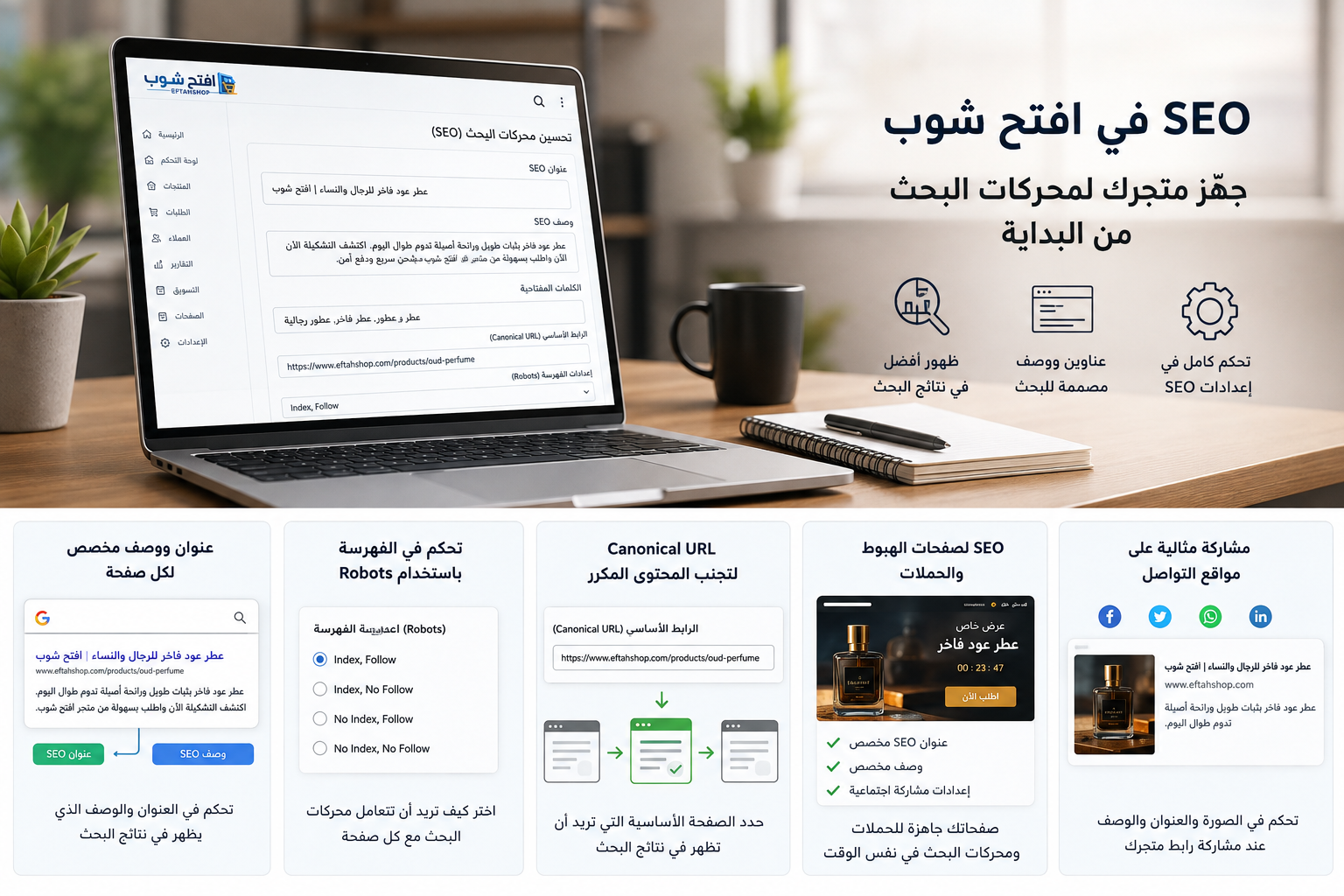
This is why product names, descriptions, page titles, store structure, and SEO should be considered from the beginning rather than relying entirely on paid advertising.
8. Other Costs You Should Consider
Depending on your business, there may be additional expenses such as:
Professional product photography, branding and logo design, packaging, customer support, premium applications, accounting, integrations, and additional development.
A common mistake is trying to build and pay for everything before making the first sale.
Instead, start with what you actually need to display your products, accept orders, and deliver them to customers. Then invest further based on real customer demand.
So, How Much Do You Actually Need to Start an Online Store in Egypt?
Instead of looking for one fixed number, divide your budget into two categories.
Setup costs include:
Store creation, domain, initial design, and product preparation.
Operating costs include:
Payments, shipping, marketing, support, and other recurring services.
Using an e-commerce platform and preparing your products and design yourself can significantly reduce the upfront cost compared with developing a custom e-commerce system from scratch.
Businesses that require specialized features and integrations should expect higher development and ongoing maintenance costs.
How Can You Reduce the Cost of Starting Your Online Store?
Start with the minimum you need to sell.
Choose a suitable ready-made theme, add your core products, prepare your ordering and delivery process, and start testing the market.
Once you understand which products sell, where your customers come from, and which payment methods they prefer, you can invest based on real data instead of assumptions.
Start Your Online Store with EftahShop
If you want to start selling online without paying the upfront cost of developing an entire e-commerce system from scratch, you can create your store with EftahShop and manage your products, storefront, and orders from one place.
Start with the essentials, test your market, and develop your store as your sales grow.